Retaining Wall for Sloped Yard: What Homeowners in Phoenix Need to Know
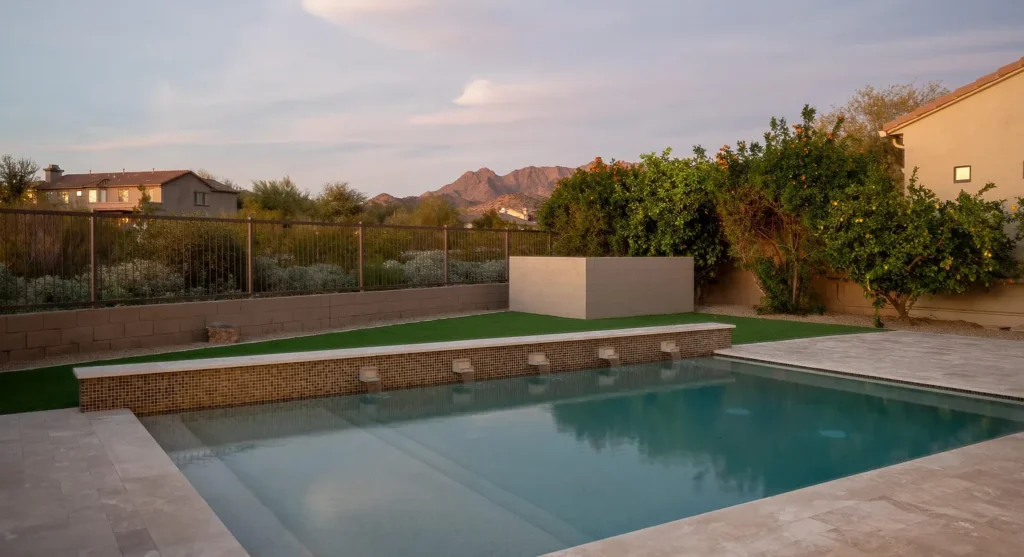
If you’re dealing with a sloped lot, installing a retaining wall for sloped yard conditions is often essential — not just for aesthetics, but for safety, usability, and long-term property value. In the Phoenix metro area, this is especially relevant: according to the Maricopa County Flood Control District, improper grading and unmanaged runoff are among the leading contributors to residential drainage and erosion issues during monsoon season.
Whether you’re planning a custom home or improving an existing yard, understanding how retaining walls work and when they’re necessary can help you make informed decisions before construction begins.
Can You Build a Retaining Wall on a Sloped Yard?
Yes — and in many cases, you should.
A properly designed retaining wall for sloped yard applications stabilizes soil, prevents erosion, and creates usable, level space. Without one, gravity and water runoff can gradually shift soil, damage landscaping, and even impact your home’s foundation.
For mild slopes, a single retaining wall may be sufficient. For steeper lots, builders often recommend tiered retaining wall systems, which divide the slope into multiple levels to reduce pressure and improve long-term stability.
A custom home builder will understand the best way to address your land early in the process to avoid costly mistakes and design revisions.
What Is the 1/3 Rule for Retaining Walls?
The 1/3 rule is a foundational guideline in retaining wall construction: Roughly one-third of the wall’s total height should be buried below ground.
For example, when adding a 6-foot retaining wall, bury 2 feet underground with 4 feet showing on above. This helps to prevent sliding or tipping, anchor the wall against soil pressure, and improve structural durability
However, this is only a starting point. In Arizona, retaining walls over certain heights (often 3–4 feet) typically require engineering and permitting to ensure compliance with local building codes. In this case, it is imperative to work with an experienced contractor to ensure that all codes are understood and satisfied.
What Is the Best Retaining Wall for a Steep Slope?
The right system depends on your slope, soil conditions, and intended use of the space. For steep yards, these are the most common solutions:
Engineered Block Retaining Walls
- Most widely used in residential construction
- Reinforced with geogrid for added strength
- Cost-effective and visually versatile
Poured Concrete Retaining Walls
- Highest structural strength
- Ideal for tight spaces or structural support
- Higher upfront cost
Tiered Retaining Walls
- Break a steep slope into multiple levels
- Reduce pressure on each individual wall
- Create functional outdoor spaces
In Phoenix hillside areas like Arcadia or Paradise Valley, tiered engineered systems are often the safest and most practical approach. These types of structural considerations often overlap with large-scale site work such as a full-home remodel or pool and landscape project.
How Do You Stop a Sloped Yard from Eroding?
If your yard is already eroding, installing a retaining wall is only part of the solution. A complete system includes:
- Proper footing and compacted base
- Gravel backfill for drainage
- Perforated drain pipe behind the wall
- Weep holes to relieve hydrostatic pressure
- Surface grading to direct water away
Without proper drainage, water builds up behind the wall, increasing pressure and eventually leading to failure. This is especially critical in Phoenix, where monsoon storms can deliver heavy rainfall in short periods.
How Steep Can a Slope Be Without a Retaining Wall?
Slope steepness is typically measured as a ratio:
- 0-10deg slope (gentle) → Often manageable with grading and landscaping
- 10-20deg slope (moderate to steep) → May require reinforcement
- >20deg → Usually requires a retaining wall or engineered solution
- >50deg (hillside) → Requires a retaining wall
In many Phoenix-area properties with loose or sandy soil, slopes can become unstable faster than expected, meaning retaining walls may be necessary even on moderate grades.
Cost of a Retaining Wall for a Sloped Yard in Phoenix
For a typical residential project, total costs often range from $10,000 to $50,000+, depending on complexity. Additional costs may include excavation and grading, engineering and permits, and drainage systems. Since no two projects are exactly alike, you can determine the cost of your project by contacting a licensed contractor who specializes in building retaining walls for sloped yards.
When to Plan for a Retaining Wall
The best time to address a retaining wall for sloped yard conditions is before home construction begins. The second best time is when you first notice soil erosion or other important signs of instability. Waiting too long can lead to redesign costs, permit delays, and unexpected site issues.
Retaining walls are not just landscaping features (though they can be made to be beautiful). They’re structural systems that should be integrated into your overall build plan from the start or as soon as soil erosion demands it if the primary residence is already in place.
Final Thoughts
A well-designed retaining wall does more than hold back soil. It transforms a difficult sloped lot into usable, functional space while protecting your investment long-term.
In a market like Phoenix, where grading, drainage, and soil conditions play a major role in construction, taking a proactive approach to retaining walls can prevent costly issues down the road. This is why it is imperative to work with an experienced builder, such as Erwin Jaye Homes, who understands the ins and outs of retaining walls and when they are needed.Whether you’re ready to build a retaining wall right away or simply researching if it is necessary, please reach out to us to discuss your project. We’re always happy to help.
References
- Maricopa County Flood Control District – Flood control and drainage guidance for Maricopa County
- General cost ranges derived from regional contractor averages and residential construction data for Arizona