The Best Insulation for Luxury Homes in Phoenix: What to Know Before Building or Renovating
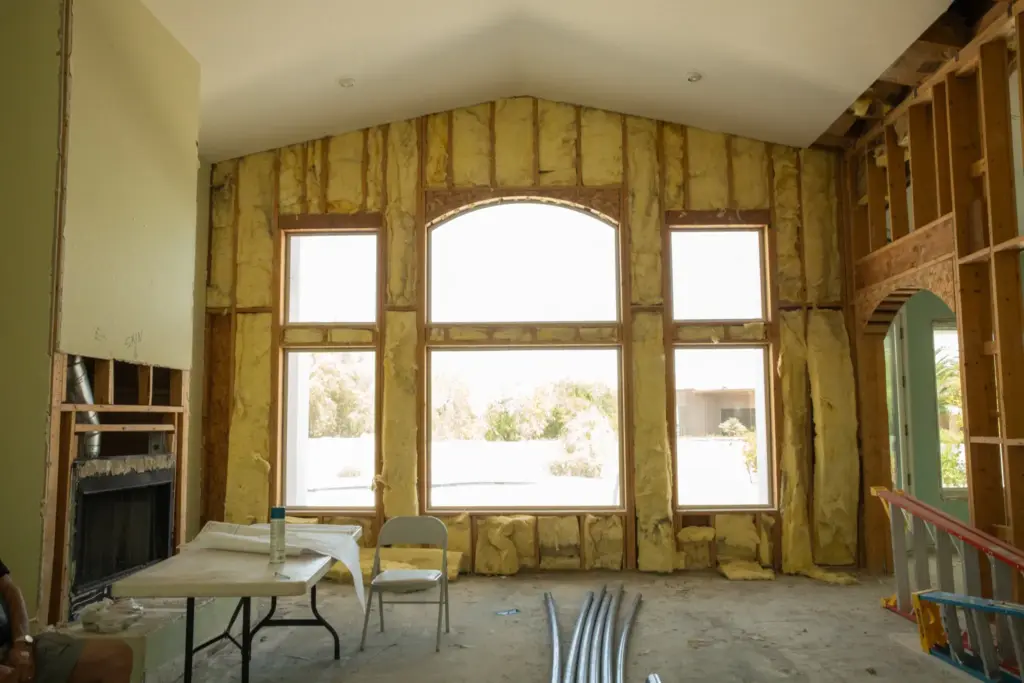
In the Phoenix area, luxury home performance is about more than beautiful finishes, expansive glass, and elevated outdoor living spaces. Behind the walls, above the ceilings, and around the building envelope, insulation plays a major role in how a home feels day to day.
For luxury properties in Arcadia, Paradise Valley, Scottsdale, and surrounding Phoenix neighborhoods, the right insulation strategy can help improve indoor comfort, reduce heat gain, support HVAC performance, and create a quieter, more consistent living environment. This is especially important in large custom homes, where vaulted ceilings, oversized windows, open floor plans, casitas, garages, and indoor-outdoor spaces can all affect how efficiently the home cools.
Whether you are planning a new custom home or a large-scale renovation, insulation should not be treated as a basic checklist item. It should be part of the home’s overall performance plan.
While the various insulation options, performance ratings, and building considerations may seem overwhelming, there is no need to navigate them alone. At Erwin Jaye Homes, we have guided homeowners through countless custom builds and renovations, developing a deep understanding of what works best in the Phoenix climate. When you work with us, you won’t need to worry about any of these details yourself – but if you’re curious about how insulation choices can affect comfort, efficiency, and long-term performance, read on.
Why Insulation Matters So Much in Phoenix
Phoenix homes face a unique challenge: long stretches of extreme heat. In the summer, the attic, roof assembly, exterior walls, and window systems are constantly exposed to intense solar gain. Without a thoughtful insulation plan, cooled air can escape, hot attic air can radiate into living areas, and the HVAC system may have to work harder to maintain the desired temperature.
R-value is one of the most common measurements used to compare insulation performance. According to ENERGY STAR, R-value measures an insulation material’s ability to resist heat traveling through it; the higher the R-value, the better the thermal performance. However, R-value is only part of the story. The U.S. Department of Energy notes that insulation performance also depends on how and where the material is installed, whether it is compressed, and how well the home is air sealed.
That distinction matters in luxury construction. A high-end home with poorly installed insulation may still experience uneven temperatures, hot rooms, high cooling costs, or uncomfortable second-story spaces. A well-planned insulation system, on the other hand, works with the HVAC design, windows, roof, and air sealing strategy to create a more comfortable home.
Common Types of Insulation Used in Arizona Homes
There is no single “best” insulation for every Phoenix home. The right choice depends on the home’s design, budget, framing, attic configuration, remodel scope, and energy-efficiency goals.
Fiberglass insulation is one of the most common options. It is available as batts or blown-in insulation and is often used in attics and wall cavities. It is generally more affordable than spray foam, but installation quality matters. Gaps, compression, or missing areas can reduce its effectiveness.
Cellulose insulation is another blown-in option, often used in attics or wall cavities. It can provide good coverage in irregular spaces and is commonly used in retrofit situations.
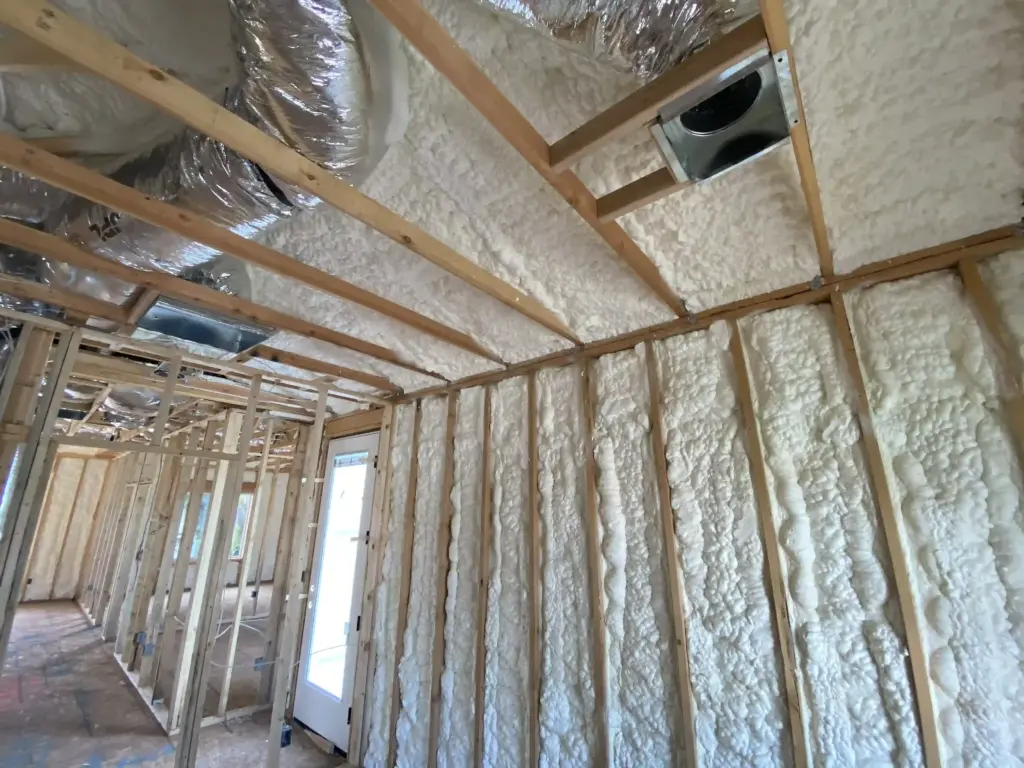
Spray foam insulation is often considered for higher-performance homes because it can help with both insulation and air sealing. Open-cell and closed-cell spray foam have different performance characteristics, costs, and appropriate applications. It can be a strong choice in certain custom home assemblies, but it needs to be specified and installed carefully.
Mineral wool insulation is valued for thermal performance, sound control, and fire resistance. It may be used in wall assemblies, interior partitions, or areas where sound dampening is important.
Rigid foam insulation is often used as part of exterior wall, roof, or specialty assemblies. It can help reduce thermal bridging when designed correctly.
Radiant barriers are also common in hot climates, but they are often misunderstood. The Department of Energy explains that radiant barriers do not have inherent R-value; instead, they reduce cooling loads by reflecting radiant heat away from the living space. In other words, a radiant barrier is not a replacement for insulation. It is a separate tool that may be used as part of a broader heat-control strategy.
What R-Value Should Phoenix Homes Have?
For Phoenix and Tucson, a summary of key residential energy code requirements from the Insulation Institute shows the 2018 IECC, as amended, listing prescriptive requirements of R-13 for wood-frame walls and R-38 for ceilings. The same summary lists an air leakage measurement of 5 ACH50 for Phoenix.
For homeowners thinking beyond minimum requirements, ENERGY STAR’s retrofit guidance for Climate Zone 2 recommends R-49 for an uninsulated attic, R-38 when the attic already has 3 to 4 inches of existing insulation, and R-13 for uninsulated floors.
This is where luxury custom home planning becomes important. Code minimums are not always the same as optimal comfort. In a high-end Phoenix home, the best insulation plan may depend on roof design, attic type, HVAC duct placement, window exposure, ceiling height, and whether the goal is simply code compliance or a higher-performing building envelope.
How Much Does Insulation Cost in Phoenix?
Insulation costs vary widely based on material, square footage, access, demolition, labor, and whether the project is part of a new build or a renovation.
Recent Phoenix cost data from Angi lists general insulation installation at $1 to $4.50 per square foot, with average Phoenix insulation installation costs ranging from $743 to $1,594 and most homeowners spending around $1,152. Labor for insulation installers in Phoenix is listed around $40 to $80 per hour.
For blown-in insulation specifically, Angi lists the average Phoenix cost at $987, with a common range from $660 to $1,350. The same source lists blown-in insulation at $1.05 to $4.50 per square foot depending on type, with 1,500 square feet estimated at $1,575 to $6,750.
Material costs also vary. Phoenix-area insulation material estimates list fiberglass around $0.30 to $1.50 per square foot, cellulose around $0.60 to $2.30 per square foot, mineral wool around $1.40 to $4 per square foot, and wood fiber around $4.25 to $6.75 per square foot.
For luxury homes, these numbers should be treated as planning ranges, not exact quotes. A large custom home or major renovation in Arcadia, Paradise Valley, or Scottsdale may include additional costs for removal, access, wall openings, air sealing, specialty assemblies, post-construction cleanup, or coordination with HVAC and electrical work.
That said, experienced luxury builders can often define insulation-related costs with a high degree of accuracy during the planning phase. At Erwin Jaye Homes, we work closely with architects, engineers, and trade partners to develop detailed budgets early in the process, helping homeowners understand expected costs upfront and avoid surprises as construction progresses.
New Builds vs. Large-Scale Renovations
In a new custom home, insulation can be planned from the beginning. This allows the builder, architect, and mechanical team to coordinate wall assemblies, attic strategy, duct placement, window performance, and air sealing before construction begins. That is the ideal time to decide whether the home should use traditional vented attic insulation, spray foam at the roofline, rigid foam, upgraded wall insulation, or a hybrid approach.
In a large-scale renovation, the strategy is often different. The team may need to evaluate existing attic insulation, wall cavities, roof conditions, ductwork, and areas where air leakage is occurring. Renovations also create opportunities. If walls are already being opened, ceilings are being removed, or HVAC systems are being redesigned, it may be the right time to improve insulation and air sealing rather than simply replacing finishes.
Common Insulation Mistakes and Myths
One common myth is that more insulation always solves the problem. Higher R-value can help, but poor installation, gaps, compression, and air leaks can limit performance.
Another mistake is treating insulation and HVAC as separate decisions. In Phoenix, the insulation plan directly affects cooling load, airflow needs, duct performance, and comfort. A home with poor insulation may require the HVAC system to work harder, while a better insulated and air-sealed home can support more consistent temperatures.
A third mistake is assuming spray foam is automatically the best option. Spray foam can be very effective in the right application, but it is not the right answer for every home. The assembly, ventilation approach, budget, and installation quality all matter.
Finally, many homeowners overlook the attic. In Phoenix, attic insulation is one of the most important parts of the home’s thermal envelope. If the attic is under-insulated, poorly sealed, or filled with leaky ductwork, the rest of the home may struggle to perform as intended.
Final Thoughts
For luxury homes in Phoenix, insulation is not just a behind-the-scenes construction detail. It is part of the comfort, efficiency, and long-term livability of the home.
The best insulation strategy depends on the property, the design, and the goals of the project. A new custom home in Paradise Valley may call for a different approach than a historic Arcadia renovation or a Scottsdale estate with large glass openings and multiple rooflines. That is why insulation should be discussed early, alongside HVAC design, windows, roofing, and the overall building envelope.
When planned well, insulation helps create the kind of luxury that homeowners feel every day: quieter rooms, steadier temperatures, better energy performance, and a home that is built for the realities of desert living.
If you’re planning a custom home or major renovation in Phoenix, Scottsdale, Paradise Valley, or Arcadia, the team at Erwin Jaye Homes can help guide every detail of the process. From insulation and energy performance to design, construction, and finishing touches, we coordinate each element with precision and care so you don’t have to worry about managing the complexities yourself. Reach out to Erwin Jaye Homes to discuss your project and learn how we can bring your vision to life with exceptional craftsmanship and attention to detail.