Can Adding a Casita or ADU Increase the Value of Your Phoenix Property?
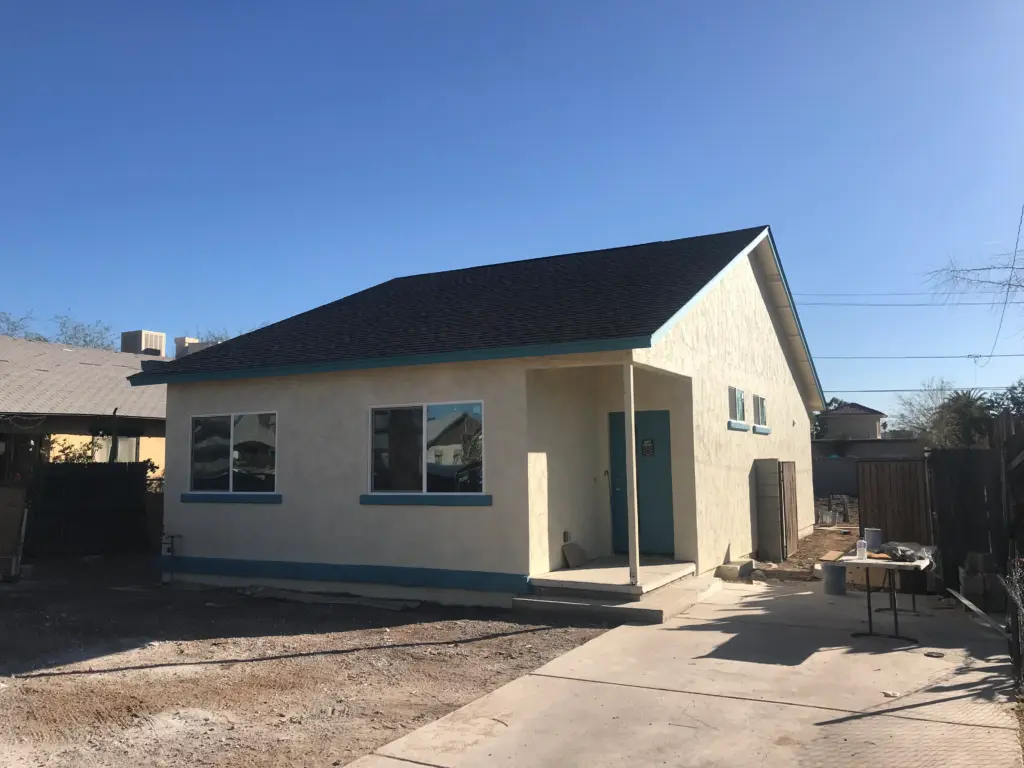
For many luxury homeowners in Phoenix, Scottsdale, Paradise Valley, and Arcadia, the idea of adding a casita or accessory dwelling unit has become much more than a nice-to-have feature. It can be a practical way to add flexible living space, support multigenerational living, create guest accommodations, and potentially increase the long-term value and usability of a property.
In Arizona, ADUs have also become a more timely topic because of recent state and city-level changes. Arizona House Bill 2720, signed in 2024, requires larger municipalities to allow accessory dwelling units on lots where single-family homes are allowed, subject to certain rules.
For luxury properties, the opportunity is especially interesting. Many high-end homes already have the lot size, outdoor space, and lifestyle need for a detached guest suite, pool house, in-law suite, or private rental space. The key is knowing what is legally allowed, what the project may cost, and how to design the ADU so it feels intentional rather than added on.
Read on to see how Erwin Jaye Homes can guide your ADU project from initial concept through final completion.
What Is an ADU?
An accessory dwelling unit, often called an ADU, casita, guest house, granny flat, or in-law suite, is a secondary living space located on the same property as a primary single-family home.
The City of Phoenix describes ADUs as attached or detached additional living spaces that include a kitchen and are located on a single-family residential property. Phoenix’s guide notes that ADUs are designed for independent living and may be created by converting part of an existing home, adding an extension, converting a garage, or constructing a new detached structure.
That flexibility is part of what makes ADUs so appealing. A casita can be designed as a fully independent guest retreat, a long-term space for aging parents, a private suite for adult children, or a rental unit.
Are ADUs Legal in Phoenix?
Yes, but the details matter.
Phoenix’s current ADU guidance states that state law and city ordinance allow two ADUs, and on some parcels three ADUs, per single-family detached house. [3] Phoenix also states that each ADU may be up to 75% of the gross floor area of the main house, with size limits based on lot size. For lots up to 10,000 square feet, the maximum ADU size is 1,000 square feet or 75% of the primary home’s gross floor area, whichever is less. For lots over 10,000 square feet, the maximum ADU size is 3,000 square feet, 10% of the net lot area, or 75% of the primary home’s gross floor area, whichever is less.
Phoenix also lists setback and height rules. For example, a detached ADU may be located no closer than 5 feet to a street-side property line, 3 feet from an interior property line, and 0 feet from a property line abutting a fully dedicated alley. Phoenix’s ADU guide also states that a detached ADU located within the required rear yard may not exceed 15 feet in height unless a use permit is obtained.
For homeowners in Scottsdale, the rules are similar in concept but different in detail. Scottsdale adopted Ordinance 4687 on September 30, 2025, allowing ADUs and establishing city-specific requirements. Scottsdale allows one attached and one detached ADU per single-family property, with a possible third detached ADU on properties one acre or larger if at least one ADU qualifies as affordable housing. Scottsdale also limits the first ADU to 1,000 square feet or 75% of the main residence, whichever is less, while second and third ADUs are limited to 500 square feet.
Paradise Valley, HOA communities, historic districts, utility easements, and specific zoning overlays may have additional considerations. Before designing or budgeting for an ADU, homeowners should confirm eligibility with the local jurisdiction and review any private HOA or deed restrictions.
While the process may seem complex, you don’t have to navigate it alone. Erwin Jaye Homes has the knowledge and experience to help keep your project running smoothly and efficiently so you don’t have to second guess.
Permitting: What Homeowners Should Expect
Adding a casita is not the same as adding a shed or simple backyard structure. An ADU is a dwelling unit, which means it typically involves zoning review, building plans, utility planning, inspections, and compliance with residential building codes.
Phoenix’s residential additions and remodels process states that construction permits are needed when existing homes are remodeled or additions are made, including garage or carport construction or conversion. The city’s process includes submitting building plans and a permit application, staff review, possible corrections, plan approval, permit fee payment, and permit issuance.
Phoenix is also working toward approved ADU standard plans that will be available at no cost to residents. The city notes that a plot or site plan will still be required for permitting, but approved standard plans may help remove part of the design-fee barrier for some homeowners.
For luxury homes, however, many ADUs will not be standard-plan projects. A custom casita in Arcadia, Paradise Valley, or Scottsdale may need to match the architecture of the main residence, work around existing pool areas or landscaping, provide privacy from neighboring properties, and coordinate with outdoor living spaces. That usually requires a more detailed design and construction process, which is where Erwin Jaye Homes excels.
How Much Does It Cost to Build an ADU?
Costs vary widely depending on whether the ADU is a garage conversion, attached addition, above-garage suite, or new detached structure.
National cost data from Angi lists the average ADU cost at about $180,000, with most homeowners spending between $40,000 and $360,000. Angi also lists a typical cost range of $150 to $300 per square foot, with some ADUs exceeding $600 per square foot depending on complexity and finish level.
By size, Angi estimates the following general ranges: a 400-square-foot ADU may cost $60,000 to $120,000, a 600-square-foot ADU may cost $90,000 to $180,000, a 750-square-foot ADU may cost $112,500 to $225,000, and a 1,000-square-foot ADU may cost $150,000 to $300,000.
For luxury properties, the upper end of these ranges may be more realistic, especially if the casita includes custom finishes, high-end millwork, premium windows and doors, stone or tile details, upgraded HVAC, a kitchenette, a full bath, smart home features, or architectural details designed to complement the main residence.
Other costs can include design, engineering, utility connections, site prep, foundation work, grading, landscaping restoration, pool-area modifications, hardscape adjustments, and permit fees. Angi estimates design costs can account for 10% to 15% of the total project cost, while materials may account for 45% to 50%.
How Long Does an ADU Project Take?
A simple conversion may move faster than a ground-up detached casita, but homeowners should not expect an ADU to be a quick weekend project. A national Better Homes & Gardens article notes that ADU projects can take 9 to 12 months from start to finish when factoring in design, bids, selections, construction, and project management.
For a luxury custom ADU, the timeline may depend on architectural design, city review, site conditions, structural requirements, utility work, and finish selections. A realistic planning window should include time for feasibility review, design, permitting, construction, inspections, and final detailing. Fortunately, experienced professionals can help establish a realistic timeline early in the process, giving homeowners a clearer understanding of what to expect from start to finish.
How Can a Casita Add Value?
A well-designed ADU can add value in several ways:
First, it adds functional square footage. Unlike a bonus room, a true ADU can operate as an independent living space with sleeping, sanitary, and kitchen facilities. That can make the property more useful for guests, family, or tenants.
Second, it can broaden the buyer pool. Freddie Mac found that ADU presence in real estate listings has increased significantly over time. In 2000, 1.6% of active for-sale listings had ADUs; by 2019, that share had grown to 6.8%. Among sold homes, less than 9,000 homes, or 1.1% of homes sold on MLS in 2000, had ADUs. By 2019, that grew to nearly 70,000 homes, or 4.2% of homes sold on MLS.
Third, an ADU may create rental potential. Zillow’s Phoenix rental market data listed the average rent for all bedrooms and property types in Phoenix at $1,867 as of May 30, 2026, with studio apartments averaging $995 per month and one-bedroom apartments averaging $1,224 per month. Actual rent for a casita will vary by location, size, finishes, parking, privacy, lease terms, and whether short-term rental rules apply, but rental income is one reason many homeowners explore ADUs.
Finally, a casita can add lifestyle value even when it is never rented. For many luxury homeowners, the benefit is having a private space for visiting family, a comfortable in-law suite, a quiet work retreat, or a poolside guest house that makes the property live larger.
Common Uses for a Luxury ADU
The most common uses include guest accommodations, multigenerational living, rental income, private offices, wellness spaces, creative studios, and pool houses. In Arcadia, Paradise Valley, and Scottsdale, many homeowners may be less focused on maximizing rent and more focused on creating a flexible space that improves the property’s long-term livability.
A casita can allow aging parents to remain close while maintaining privacy. It can give adult children independence without leaving the property. It can provide guests with a resort-like experience. It can also serve as a future-proofing feature as household needs change over time.
Final Thoughts
Adding a casita or ADU can be one of the most meaningful ways to expand a luxury property in the Phoenix area. It can add usable space, support family needs, create rental potential, and make a home more adaptable over time.
However, the best ADU projects begin with careful planning. Zoning, lot coverage, setbacks, utility access, permitting, architecture, budget, and long-term use should all be considered before construction begins.
For homeowners in Phoenix, Arcadia, Paradise Valley, or Scottsdale, the right casita should feel like it always belonged on the property. When designed and built well, an ADU can become more than an addition. It can become one of the most valuable and versatile spaces on the entire estate.
If you’re thinking about adding a casita or ADU to your property, contact Erwin Jaye Homes today to schedule a consultation. We’ll help you determine what’s possible, develop a plan that fits your goals, and bring your vision to life with confidence.